
Breathe Easier: Expert Air Duct Cleaning for Healthier Homes and Efficient Systems
Transform your living space with professional air duct cleaning that clears out hidden dust, boosts your HVAC system’s performance, and supports your family’s well-being. This guide will show you how expert duct and dryer vent cleaning services can dramatically improve your air quality, prevent dangerous fire hazards, and ensure your home or business meets all necessary standards. We’ll explore four key areas:
- The science behind air duct cleaning and its health advantages
- How keeping dryer vents clear boosts fire safety and system efficiency
- The impact of commercial HVAC cleaning on productivity and compliance
- Understanding costs, dealing with mold, the value of certifications, and finding local experts
Packed with straightforward explanations, practical advice, helpful charts, and easy-to-read lists, this article is your go-to resource for homeowners, property managers, and associations in Rhode Island and Massachusetts looking to enjoy cleaner air and a more efficient home.
How Does Professional Air Duct Cleaning Make Your Indoor Air Better?
Professional air duct cleaning uses a “source removal” technique to pull out dust, mold spores, and allergens before they get recirculated. This process not only makes your HVAC system run better but also cuts down on airborne irritants, creating a healthier environment for everyone.
What Kind of Grime Do We Get Out of Your Air Ducts?
Before we list the usual suspects, it’s important to know that our source removal cleaning targets particles stuck to the inside of your ducts and HVAC components.
- Dust and Dirt Buildup: These settle in your ductwork over time.
- Pet Dander: Shedding pets can send this into your vents, triggering allergies.
- Pollen and Mold Spores: These can easily drift in from the outside air.
- Bacteria: Moisture in certain parts of your HVAC system can encourage bacterial growth.
By tackling these pollutants right at the source, our professional cleaning stops the cycle of contamination and gets your system ready to circulate fresh, clean air.
How Do Clean Air Ducts Help with Allergies and Asthma?
Clean air ducts significantly reduce allergy and asthma symptoms by removing the hidden dust mites, pollen, and mold spores that often trigger respiratory issues. When these irritants are gone, they can’t circulate, leading to easier breathing and fewer allergy flare-ups. Cleaner ducts can also mean less reliance on medication, contributing to overall better health.
What's the NADCA-Approved Way to Clean Air Ducts?
The National Air Duct Cleaners Association (NADCA) recommends a detailed four-step process designed for thorough cleaning and sanitization:
| Step | What We Do | Why It Matters |
|---|---|---|
| Inspection | We look inside your ducts with cameras to see what’s there. | This helps us spot the exact level of contamination and where to access it. |
| Agitation | We use special brushes and air tools to loosen debris. | This breaks up stubborn buildup so it can be removed. |
| HEPA Vacuuming | We use powerful vacuums with HEPA filters. | These capture the loosened particles without releasing them back into your air. |
| Sanitization | We apply EPA-approved antimicrobial treatments. | This helps prevent bacteria and mold from growing back. |
This systematic approach is proven to remove up to 99% of pollutants, ensuring your air quality stays improved for longer.
The NADCA Standard for a Truly Clean HVAC System
The National Air Duct Cleaners Association (NADCA) champions a “source removal” method for cleaning HVAC systems. This involves using specialized tools to dislodge contaminants and then capturing them with vacuums that maintain continuous negative pressure and use HEPA filtration. The goal is to remove dust, allergens, and microbial growth from every part of your HVAC system, leading to better indoor air and a more efficient system.
This information directly backs up our explanation of the NADCA-recommended cleaning process, its steps, and how it benefits your indoor air quality and HVAC performance.
How Often Should Your Air Ducts Get Cleaned for the Best Air Quality?
For most homes, cleaning your air ducts every 3–5 years is recommended, following guidelines from NADCA and the EPA. If you have pets, family members with allergies, or have recently renovated, consider cleaning every 2–3 years. Commercial buildings may need cleaning annually to maintain top air quality standards.
Why Dryer Vent Cleaning is Crucial for Fire Safety and Efficiency
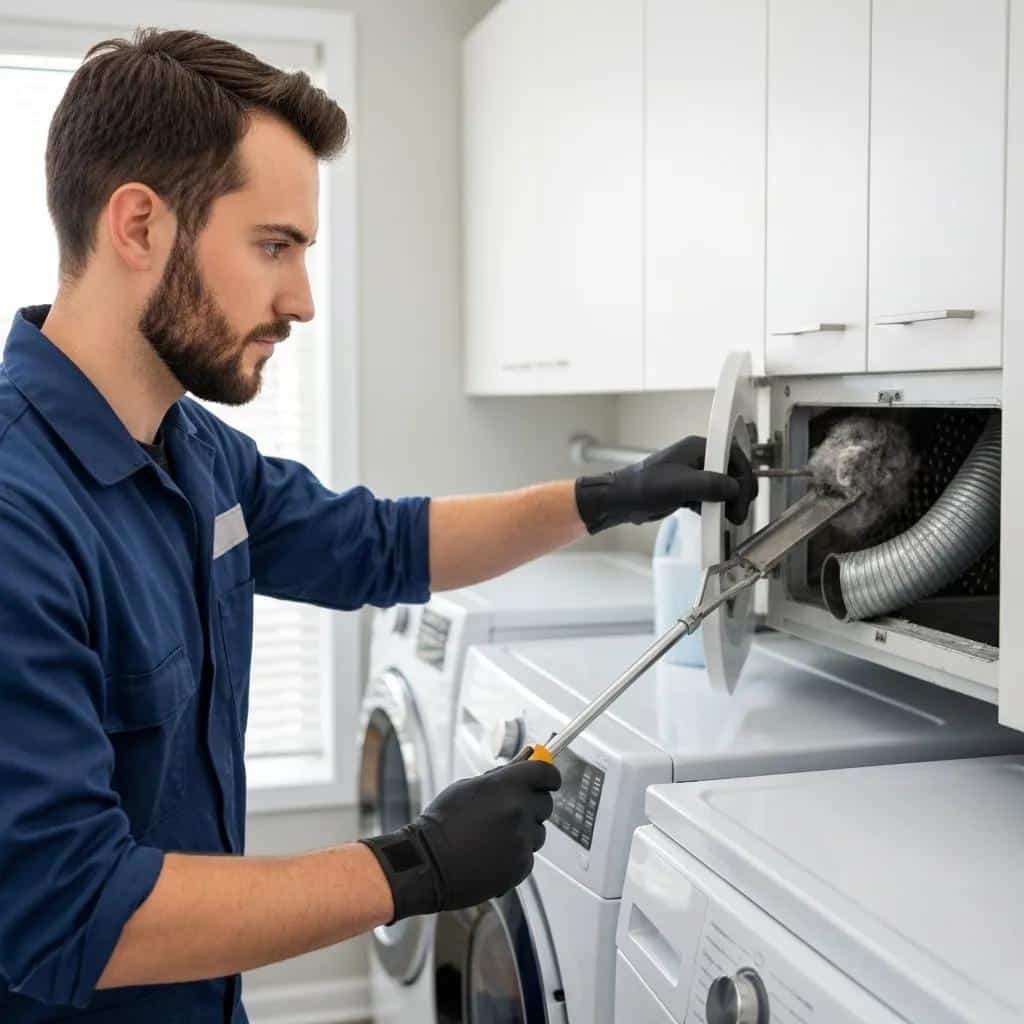
Regularly cleaning your dryer vent is essential for preventing fires and keeping your dryer running efficiently by removing the lint that blocks airflow. This maintenance means your clothes dry faster, your energy bills go down, and your appliance lasts longer.
How Does Cleaning Your Dryer Vent Stop Fires?
Dryer vent cleaning prevents fires by clearing out lint buildup, which is highly flammable and can easily ignite when the dryer gets hot. A clear vent allows hot air to escape properly, reducing the risk of a fire starting inside your ductwork.
Preventing Dryer Fires Starts with Regular Vent Cleaning
Lint buildup in dryer vents is a major cause of house fires related to clothes dryers. Restricted airflow due to lint is a primary reason these fires start. Cleaning your dryer vent regularly is key to removing this flammable lint, ensuring proper exhaust flow, and significantly lowering the chance of ignition in your ductwork, making your home much safer.
This citation provides crucial statistics and expert opinions on why dryer vent cleaning is so important for fire safety, directly supporting our points about preventing fire hazards.
What Are the Signs Your Dryer Vent Needs Cleaning?
- Your clothes are taking longer than usual to dry.
- You notice a lot of lint around the outside of your dryer.
- You smell a burning odor or the dryer feels very hot during use.
- The dryer itself feels unusually warm after a cycle.
These are clear indicators that airflow is blocked, and the risk of a fire is increasing.
How Often Should Dryer Vents Be Cleaned?
For most households, cleaning your dryer vent at least once a year is recommended. If you have a large family or a commercial laundry setup, cleaning it twice a year will help maintain efficiency and fire safety, especially with heavy use.
What Affects the Cost of Dryer Vent Cleaning?
The price of cleaning depends on how long your vent is, how complicated the ductwork is, and how easy it is to access. Homes with long or winding vent runs might cost more due to the extra labor involved, while straightforward, short vents are typically less expensive to service. Your location and whether the service provider is certified can also influence the price.
Boost Indoor Air Quality with Expert Air Duct Cleaning

Commercial HVAC and duct cleaning are vital for improving workplace air quality by removing industrial pollutants, making your system more efficient, and ensuring you meet local regulations in Rhode Island and Massachusetts. A clean system supports employee health, reduces sick days, and saves you money on energy costs.
What Makes Cleaning Commercial Ducts Different?
Commercial duct cleaning presents unique challenges, including larger duct systems, a wider variety of contaminants (like oil mist and chemical residues), and the need to minimize disruption to business operations. Meeting building codes and keeping your business running smoothly requires careful planning and specialized tools.
How Does Commercial HVAC Cleaning Save Energy and Boost Productivity?
Commercial HVAC cleaning improves energy efficiency and productivity by restoring optimal airflow and heat transfer in large systems. Better airflow means your compressors don’t have to work as hard, cutting energy costs by up to 15% and creating a more comfortable environment that helps employees stay focused and productive.
HVAC Cleaning Boosts Energy Efficiency and Airflow in Commercial Buildings
Research, including studies published in Energy and Buildings and findings from NADCA, shows that regular cleaning of commercial HVAC systems can lead to significant energy savings. Fan and blower energy consumption can drop by 41% to 60%, and supply airflow can increase by 10% to 46%. This means improved system efficiency and better ventilation in commercial and educational facilities.
This research directly supports our claims about how commercial HVAC cleaning enhances energy efficiency and productivity by restoring optimal airflow and reducing energy costs.
What Are the Rules for Commercial Indoor Air Quality in RI and MA?
Rhode Island and Massachusetts follow ASHRAE guidelines for building ventilation, which set minimum standards for outdoor air circulation and air filtration. Commercial properties must keep records of their maintenance schedules to show compliance during inspections.
How Does Cleaning Restaurant Hoods and Kitchen Vents Help Health and Safety?
Cleaning restaurant hood and kitchen vents is crucial for health and safety because it removes grease buildup that can cause fires and hinders proper exhaust. This service also prevents odors from spreading, protects kitchen staff from harmful particles, and ensures you meet local fire code requirements.
What Are the Costs and Factors for Air Duct Cleaning Services?
The cost of air duct cleaning depends on your home’s size, the number of vents, how dirty the ducts are, and the complexity of your duct system. Knowing these factors can help you budget for effective, customized cleaning solutions.
How Is the Price of Air Duct Cleaning Determined?
We calculate the cost based on your home’s square footage, the number of vents, and how easy it is to access your system. Larger homes with extensive ductwork and significant contamination will require more time and specialized equipment, leading to higher overall service fees.
Are There Price Differences Across RI and MA?
Service prices in major cities like Providence or Boston might be 10–15% higher than in smaller towns due to variations in labor costs and operational expenses. Urban areas may also have additional fees for travel and parking that affect the final quote.
How Does Dryer Vent Cleaning Cost Compare to Air Duct Cleaning?
Dryer vent cleaning is typically 40–60% less expensive than a full air duct cleaning because it focuses on a single appliance connection rather than an entire HVAC network. However, if your dryer vent is particularly long or complex, or if it’s a commercial setup, the cost could be closer to duct cleaning prices.
Are There Budget-Friendly Options for Regular Duct Maintenance?
Yes, affordable options include annual maintenance plans that bundle air duct, dryer vent, and coil cleaning at a reduced rate. These packages lower the cost per service, ensure your air quality stays consistently good, and protect your HVAC investment over time.
How Does Mold in Air Ducts Affect Your Health and How Do We Remove It?
Mold in your air ducts can impact your health by releasing spores and toxins that trigger allergies and breathing problems. Professional mold remediation restores your system’s integrity and stops further biological growth.
What Causes Mold to Grow in HVAC Ducts?
Mold grows in HVAC ducts when there’s too much humidity, leaks, or condensation on metal surfaces. Dust and debris provide the nutrients mold needs to establish and spread.
What Are the Health Risks of Mold in Your Air Ducts?
Breathing in mold spores from your ducts can cause sneezing, coughing, skin irritation, and chronic sinus infections. People with weakened immune systems are at a higher risk for severe respiratory issues.
Health Dangers Linked to Mold in HVAC Systems
Mold growth in HVAC ducts, often caused by excess moisture or leaks, can release spores and mycotoxins that pose various health risks. Exposure to these airborne contaminants can trigger allergic reactions, worsen asthma symptoms, and lead to respiratory problems, skin irritation, and even cognitive issues. Prompt mold remediation is essential to protect everyone’s health.
This citation details the causes and serious health effects of mold in air ducts, reinforcing why mold remediation is so important for improving air quality and protecting health.
How Is Mold Remediation Done During Duct Cleaning?
Mold remediation involves using HEPA vacuums, mechanically cleaning mold-affected areas, and applying EPA-approved antimicrobial treatments. This thorough process eliminates existing mold and prevents it from returning quickly.
When Should You Book Mold-Specific Duct Cleaning?
Schedule mold-focused duct cleaning right away if you notice musty smells, see visible mold, or have experienced water damage. Acting fast will restore your air quality and protect your health.
Why Should You Choose NADCA-Certified Technicians for Your Duct Cleaning Needs?
Choosing NADCA-certified technicians means you’re getting service that meets strict industry standards, backed by advanced training and consistent quality. Certification shows they are skilled in source removal methods and dedicated to customer satisfaction.
What Does NADCA Certification Mean for Service Quality?
NADCA certification guarantees that our technicians follow precise procedures, use professional-grade equipment, and stay up-to-date with the latest best practices. This credential ensures a systematic and thorough cleaning process.
How Do Certified Technicians Ensure a Deep Duct Cleaning?
Certified technicians use calibrated air whips, negative-pressure HEPA vacuum systems, and provide detailed reports to confirm that contaminants have been removed. Their expertise leads to cleaner duct interiors and measurable improvements in your indoor air quality.
How Does Certification Affect Indoor Air Quality Results?
Certification ensures that up to 99% of particulate matter and biological pollutants are removed. This high level of cleaning leads to lasting improvements in allergen reduction and overall system performance.
Where Can You Find Expert Air Duct and Dryer Vent Cleaning Services in Rhode Island and Massachusetts?
Local service providers in Rhode Island and Massachusetts offer quick response times, understand the region’s specific needs, and provide customized maintenance plans for your indoor air quality. Choosing a local team means faster scheduling and personalized service.
What Are the Advantages of Hiring Local Duct Cleaning Experts?
Local providers are familiar with state regulations, climate-related performance issues, and common building styles in the area. Their local knowledge allows for more accurate assessments and efficient cleaning services.
What Cities in RI and MA Do You Serve?
We provide services throughout Providence, Warwick, Cranston, Boston, Springfield, Worcester, and the surrounding towns. Our coverage ensures that both urban and suburban clients receive prompt HVAC and vent cleaning.
How Can You Get a Quote or Schedule Service with 800duct.com?
To request a personalized quote, please provide basic details about your system and your address. After an assessment, one of our certified technicians will give you a detailed service proposal and a timeline for the cleaning.
What Do Our Local Customers Say About Our Duct Cleaning Services?
Happy clients frequently mention faster HVAC response times, a noticeable decrease in dust, and improved comfort levels. Our testimonials often highlight our professionalism, clear pricing, and the significant positive impact our services have on their air quality.
Professional duct and vent cleaning not only addresses health concerns and fire risks but also extends the life of your equipment and lowers your energy bills. Our certified technicians follow strict NADCA protocols to deliver measurable improvements in air quality for both homes and businesses. By understanding the types of contaminants, scheduling regular maintenance, and choosing certified services, you can ensure cleaner air and more efficient systems. Contact us today to experience the benefits of expert air duct and dryer vent cleaning in Rhode Island and Massachusetts.