
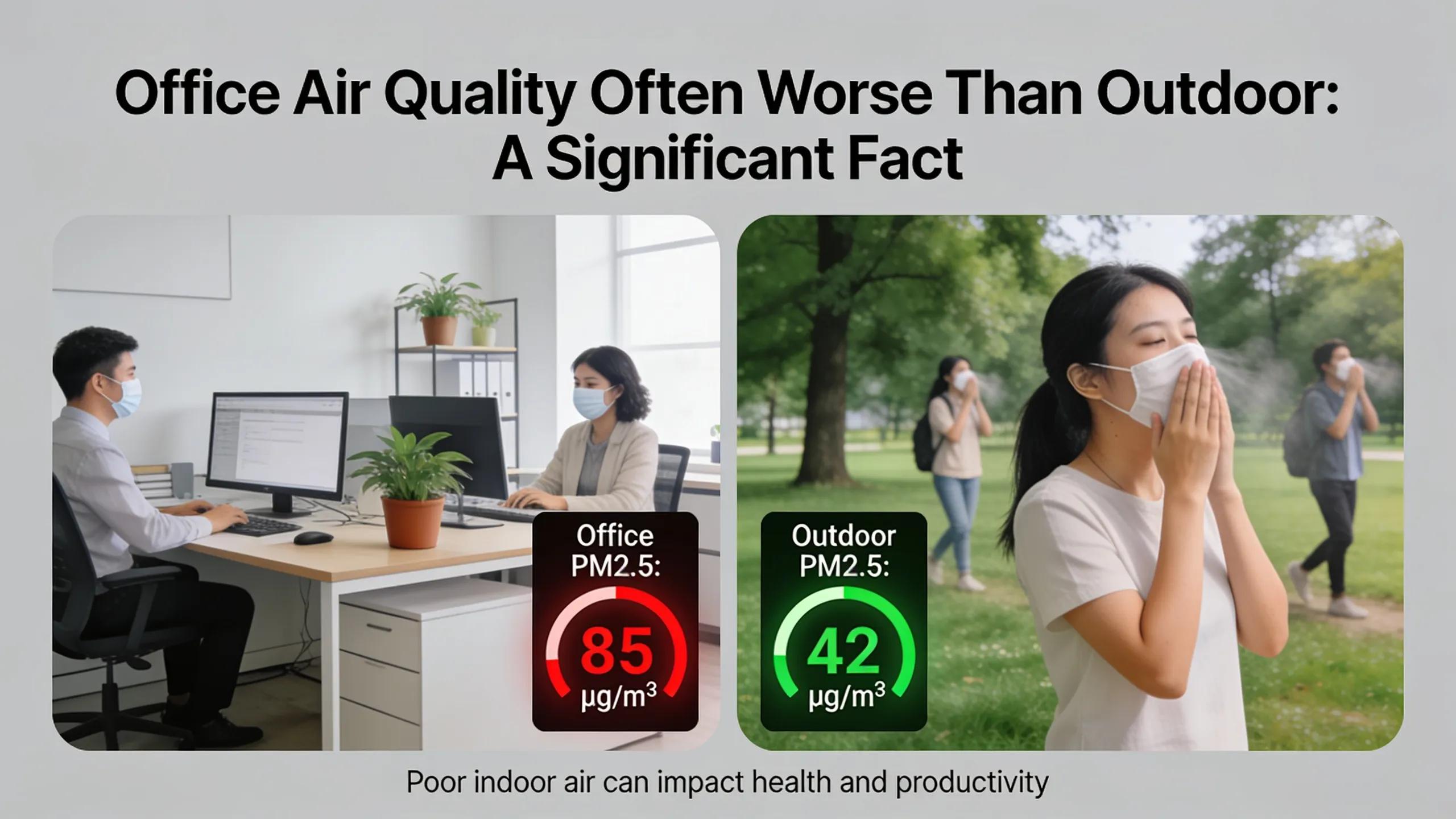
Office air quality often ranks lower than outdoor air, a fact that carries real weight
Facility managers know indoor air often runs dirtier than outdoor air. Commercial duct systems need advanced, tailored cleaning techniques to protect employee health and system efficiency. Serving businesses from Bristol, RI, 800 Duct navigates these complex commercial terrains to maximize airflow, safety, and long-term HVAC performance.
Commercial air duct cleaning removes dust, mold, and airborne contaminants from HVAC systems across office buildings, retail spaces, and industrial facilities throughout Rhode Island, Massachusetts, and Connecticut. 800 Duct addresses complex commercial duct networks that trap more debris than residential systems, improving air quality, protecting equipment efficiency, and supporting healthier conditions for employees and customers alike.
Key Takeaways
Indoor commercial air quality often proves dirtier than outdoor air without regular duct cleaning.
Contaminated ducts trigger allergies and illnesses among employees in large-scale commercial environments.
Facility managers typically overlook internal duct systems despite their equal importance to rooftop units.
800 Duct serves Bristol, RI commercial spaces with advanced duct cleaning techniques and efficiency maximization.
Why Does Commercial Duct Cleaning Matter Now?
Office air quality often ranks lower than outdoor air, a fact that carries real weight for employee health. Staff walk through the same doors every day, greet coworkers, and spend hours breathing whatever circulates through the building’s ventilation. That daily exposure makes a commercial duct cleaning guide essential reading for anyone responsible for a workplace environment, not just a nice-to-have reference.
Rooftop units and visible HVAC equipment tend to get the attention. What sits inside the walls matters just as much, even though occupants rarely see it. Neglected ductwork causes problems on par with any mechanical failure outside. The difference is that hidden issues go unnoticed far longer.
Why is ductwork often overlooked in facility maintenance?
Facility teams naturally focus on equipment they can inspect and service directly. Ducts hide behind ceilings and walls, so buildup accumulates without a visible warning sign. That invisibility is exactly why commercial HVAC cleaning deserves a scheduled place in any maintenance plan, not just a reactive call after complaints start.
Does duct cleaning apply to different property types?
Property type doesn’t change the core need for industrial duct maintenance. Results have been documented across single-family homes, condos, and apartment buildings throughout Rhode Island, Massachusetts, and Connecticut, demonstrating consistent outcomes across varied structures. The same principle extends to commercial spaces: office buildings, retail centers, and industrial facilities all rely on ductwork that needs periodic attention.
A disciplined service approach centers on a few consistent priorities:
Protecting the long-term value of the building’s HVAC investment
Reducing airborne allergens circulating through occupied spaces
Improving comfort and peace of mind for everyone inside
Skipping these steps doesn’t just risk dusty vents. It risks the health, comfort, and property value that every facility manager is ultimately responsible for protecting.
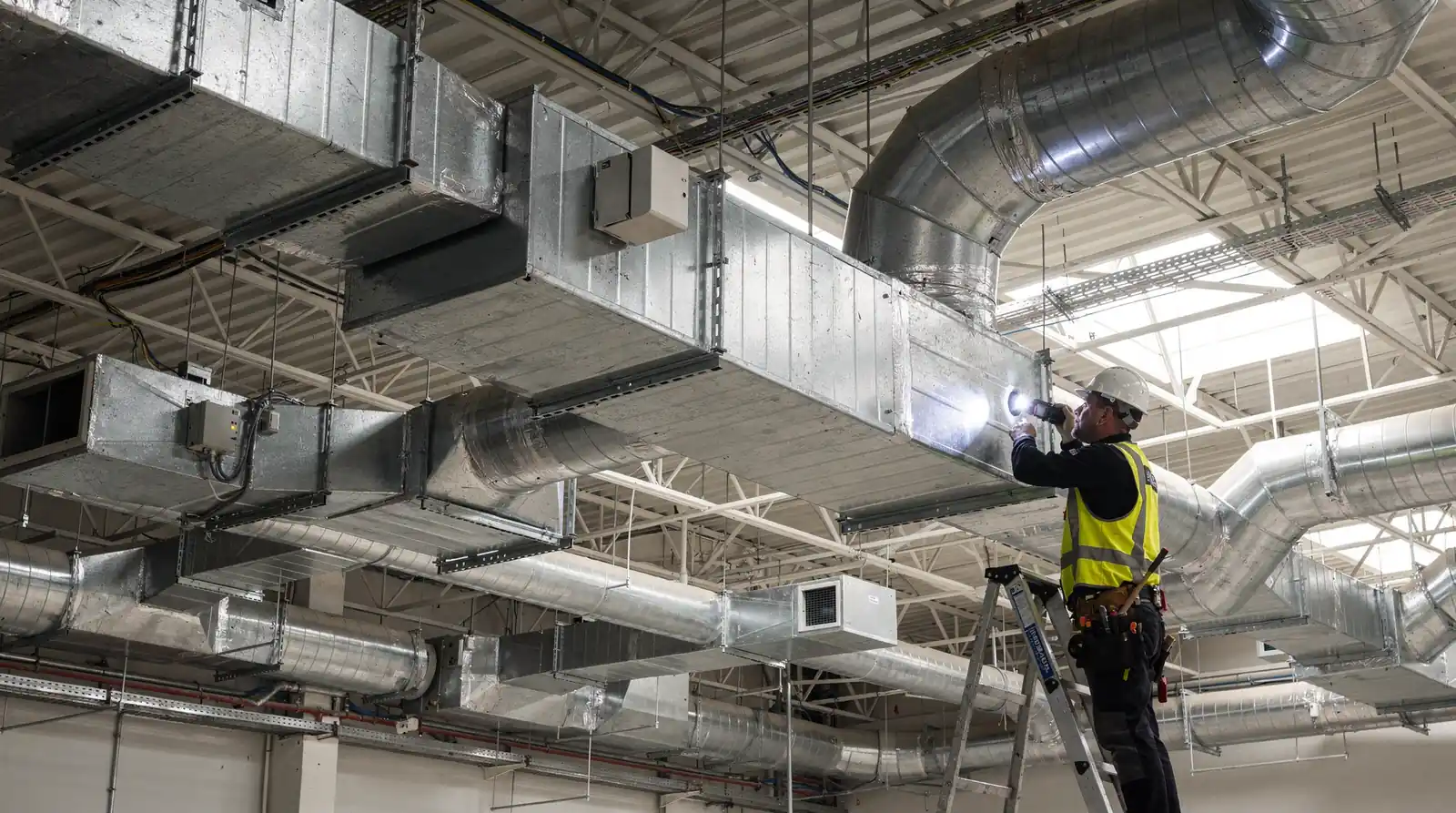
Commercial duct systems carry more air, cover more distance, and connect more equipment than residential
What Makes Commercial Duct Systems So Different?
Commercial duct systems carry more air, cover more distance, and connect more equipment than residential systems ever do. Scale changes everything about how a maintenance team plans and executes a job. Office towers, warehouses, and multi-tenant retail buildings route air through networks that behave like an entirely different animal compared to a single-family home’s ductwork.
A well-built commercial duct cleaning guide accounts for that scale from the start. Longer duct runs, multiple air handlers, and separate zones each demand individual inspection rather than a single pass-through. That structural complexity is exactly why commercial HVAC cleaning calls for different equipment, sequencing, and crew coordination than a house call does.
Residential vs. Commercial Duct Characteristics
How does experience across property types help with commercial jobs?
Working across single-family houses, condos, and apartment buildings builds a working knowledge of how ductwork varies by construction type. That variety sharpens the judgment needed when a crew steps into a much larger commercial layout. Patterns learned on smaller residential projects translate into faster, more accurate assessments on bigger systems.
Why does regional building variety matter for industrial duct maintenance?
Rhode Island, Massachusetts, and Connecticut each feature distinct building ages, layouts, and construction styles. That regional exposure informs how industrial duct maintenance gets planned for facilities with unusual configurations. Older mill buildings, newer office parks, and mixed-use complexes each present different duct routing challenges that a one-size-fits-all approach cannot solve.
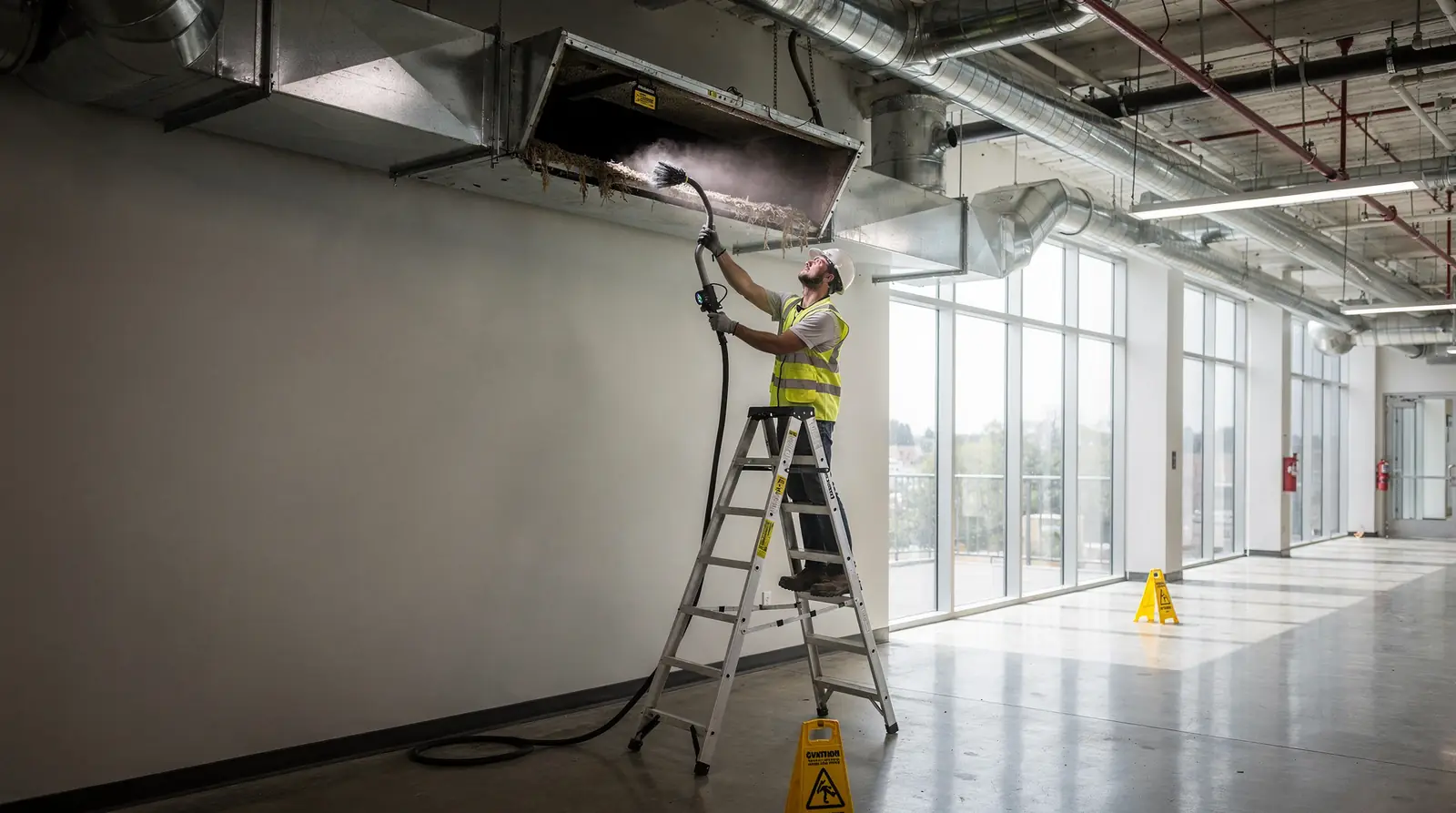
No single, industry-wide schedule dictates duct cleaning frequency for commercial buildings. Facility managers across Rhode
How Often Should Facility Managers Clean Ductwork?
No single, industry-wide schedule dictates duct cleaning frequency for commercial buildings. Facility managers across Rhode Island, Massachusetts, and Connecticut must weigh building use, occupancy, and system age when setting a maintenance calendar. A complete commercial duct cleaning guide treats frequency as a judgment call, not a fixed rule.
Scientific reviews complicate the picture further. According to the DOHS Fact Sheet on HVAC Duct Cleaning, more than two decades of research still hasn’t produced enough evidence to draw firm conclusions about how duct cleaning affects indoor air quality, occupant health, or HVAC system performance. That uncertainty doesn’t mean cleaning is optional—it means facility managers should rely on visible signs. System behavior rather than waiting for a universal standard.
Several factors typically push the maintenance calendar tighter:
Heavy foot traffic or dense occupancy
Recent renovation or construction dust
Visible debris near vents or registers
Reduced airflow or rising energy bills
How Does Regular Cleaning Improve System Performance?
Completed residential projects offer a useful benchmark for what proper commercial HVAC cleaning can accomplish. Across single-family homes, condos, and apartments, cleaned duct systems have shown improved indoor air quality and boosted efficiency. The same principle scales to larger commercial systems, where buildup accumulates faster and affects more occupants.
Does Duct Cleaning Protect Property Investment?
Every completed service supports long-term asset protection. Reduced allergens, steadier airflow, and greater comfort all trace back to consistent industrial duct maintenance practices. For building owners, that translates into fewer unexpected repairs and a system that holds its value over time. Skipping cleaning cycles doesn’t just risk air quality—it risks the mechanical investment itself.
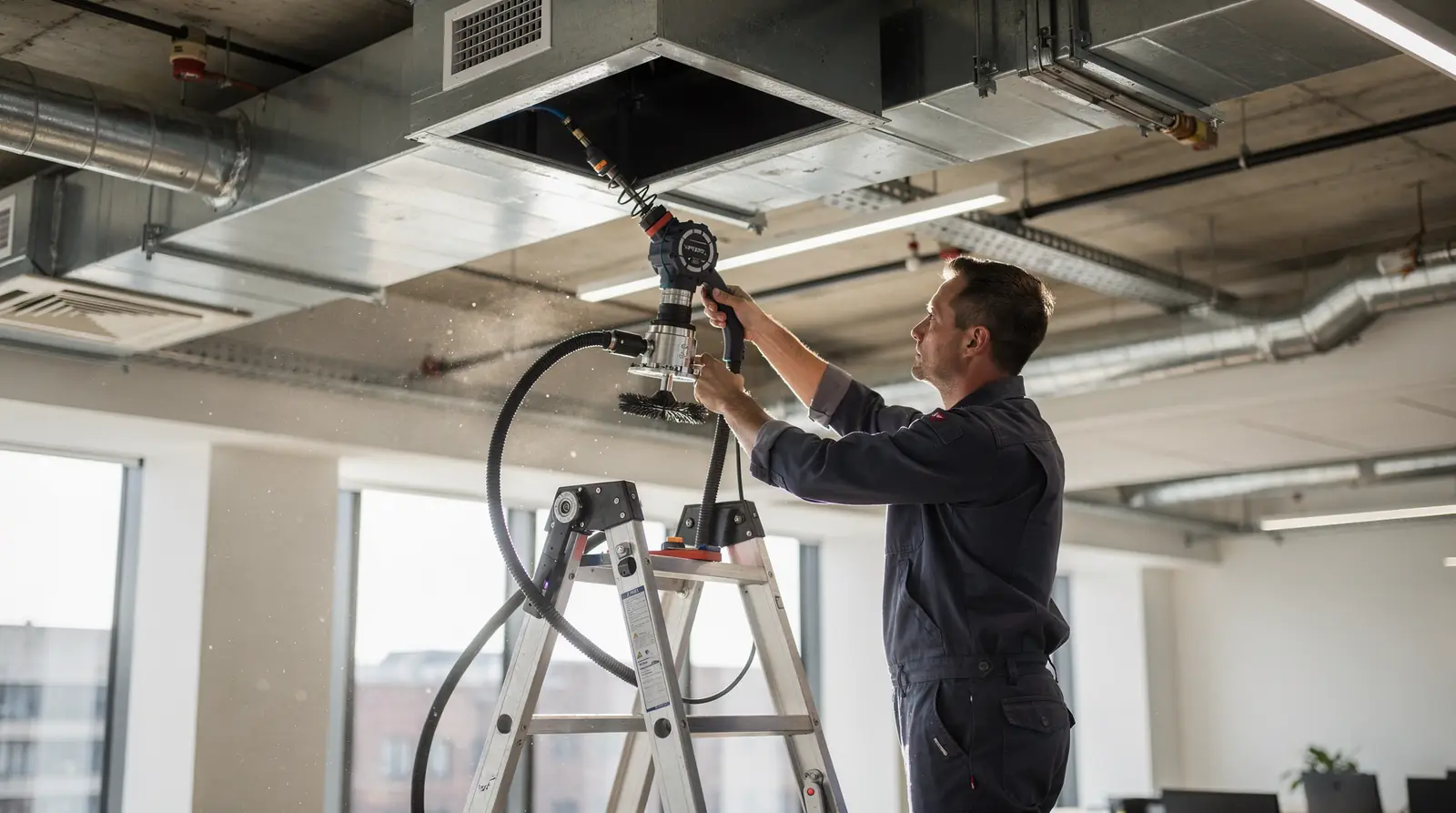
Scale drives the method. Large commercial systems accumulate more than dust. Pollen, mold, and bacteria
Which Advanced Techniques Improve Commercial Duct Cleaning?
Scale drives the method. Large commercial systems accumulate more than dust. Pollen, mold, and bacteria settle deep inside ductwork that residential systems rarely see at the same volume. A thorough commercial duct cleaning guide approach starts by recognizing that size changes everything about the job, from equipment selection to crew size.
Technicians working on large-scale properties need tools built for bigger jobs. High-powered vacuum systems, rotary brushes, and negative-air machines pull contaminants out of extended runs of ductwork that a standard residential setup would never handle. This is where commercial HVAC cleaning diverges sharply from a home-based service call: the equipment scales up, and so does the inspection process.
What Makes Industrial Ductwork Harder to Clean?
Industrial systems often run longer distances, branch into more zones, and sit behind harder-to-reach access points. That complexity means industrial duct maintenance requires careful sequencing — clearing debris in stages so contaminants don’t just shift from one section to another. Skipping steps here risks leaving mold or bacteria trapped in sections that look clean from the outside.
Does Property Type Change the Cleaning Approach?
Yes. Outcomes vary depending on the building. Project results across single-family homes, condos, and apartment complexes consistently show measurable gains in indoor air quality and system efficiency once ducts are properly serviced. The pattern holds regardless of unit size. Larger commercial footprints demand more time and more specialized equipment to reach the same result.
Best practices for advanced commercial jobs include:
Sectional cleaning to prevent cross-contamination between zones
Negative-air containment to stop debris from re-entering occupied spaces
Post-cleaning inspection to verify contaminants were fully removed
Operating out of Bristol, Rhode Island, the team applies hands-on regional expertise to properties throughout Rhode Island, Massachusetts, and Connecticut, adjusting technique to each building’s layout rather than relying on a one-size-fits-all process.
How Does Duct Cleanliness Affect Employee Health?
Dirty ductwork shapes the air employees breathe for most of the workday, and the exposure adds up fast. The average person breathes roughly 14,000 liters of air daily. Spends at least eight waking hours inside a building, a fact that puts real weight behind indoor air quality decisions. For office staff, warehouse crews, and retail teams alike, that stat isn’t abstract. It’s the air circulating past their desks and workstations every single shift.
Neglected ducts don’t just carry stale air. They can recirculate dust, dander, and particulate buildup throughout a facility, creating conditions where allergy symptoms and general discomfort become routine complaints rather than rare occurrences.
Can Duct Buildup Trigger Allergies at Work?
Buildup inside ductwork gives allergens a pathway straight into shared air. Reducing that buildup through routine service supports fewer airborne irritants circulating past employee workstations. A properly maintained commercial duct cleaning guide-style maintenance schedule keeps this risk contained rather than compounding over time.
Does Facility Size Change the Health Risk?
Larger facilities with sprawling duct networks face compounded risk because there’s more surface area for contaminants to collect. This is where broad, cross-property experience matters. Work across varied commercial environments in Rhode Island, Massachusetts, and Connecticut reflects the kind of hands-on exposure to different building types and air quality challenges that a one-size approach can’t match.
Consistent commercial HVAC cleaning service, paired with attentive industrial duct maintenance, targets allergen reduction directly. The goal is straightforward: fewer contaminants in circulation, greater day-to-day comfort for occupants, and an environment where staff aren’t distracted by stuffy air or recurring allergy flare-ups. Clean air isn’t a luxury item on a facility checklist — it’s a baseline condition for a workforce that spends the bulk of its waking hours indoors.
What Should Facility Managers Prioritize In Contracts?
Contracts should prioritize scope clarity, documented inspection standards, and accountability for internal ductwork—not just rooftop equipment. Rooftop units, condensers, and visible mechanical components tend to dominate maintenance budgets and attention. Ductwork hidden behind ceilings and walls often gets skipped entirely, even though it circulates air throughout the entire building.
A solid commercial duct cleaning guide treats internal air pathways with the same seriousness as exterior equipment. Facility managers who build contract language around this principle avoid a common gap in building maintenance plans. Preventative service for ductwork gets overlooked far too often, yet it directly supports airflow performance and system longevity.
What terms should a service agreement include?
Strong agreements spell out inspection frequency, cleaning methods, and reporting requirements in plain language. Vague terms create confusion later and make it harder to verify that work actually happened.
Contracts worth signing typically include:
Scope definition — which duct sections, air handlers, and vents are covered
Inspection documentation — before-and-after records for every job
Service frequency — a defined schedule, not a one-time visit
Response terms — clear timelines for scheduling and follow-up
Why does provider consistency matter?
Consistency protects the building’s long-term investment. Switching providers repeatedly creates gaps in service history and makes problems harder to trace.
800 Duct builds contracts around dependable, repeatable service delivery on every job, which helps property owners protect equipment value, reduce allergens circulating through occupied spaces, and maintain steadier comfort levels. This approach applies to commercial HVAC cleaning work as much as it does to lighter-duty jobs.
Facility managers overseeing larger operations should also confirm that contracts address industrial duct maintenance needs specific to higher-volume systems. Based in Bristol, RI, 800 Duct supports property teams across Rhode Island, Massachusetts, and Connecticut with contract terms built for accountability, not guesswork.
What Does The Research Say?
Scientific reviews settle one point clearly: ductwork accumulates dust over time and can harbor microbial growth under normal operating conditions. That finding matters for any facility manager weighing a commercial duct cleaning guide against a maintenance budget. Contamination inside ducts is not speculation; it is a documented condition found through years of technical review.
What that means in practice is straightforward. A building’s air handling system can look fine from the outside while the ductwork itself collects debris that circulates through occupied spaces. For property owners managing multiple tenants or large square footage, that risk carries real operational weight.
Does cleaning actually improve air quality and system performance?
Results speak louder than theory here. Completed residential projects across Rhode Island, Massachusetts, and Connecticut show measurable improvement in indoor air quality and system efficiency after service. Single-family homes, condos, and apartment buildings each demonstrate the same pattern: cleaner ductwork supports healthier air and a system that runs the way it should.
These documented results align directly with the contamination findings researchers have confirmed. When commercial HVAC cleaning follows the same evidence-based approach, facility teams gain a maintenance record they can point to, not just a promise.
How does this apply to industrial-scale buildings?
Larger facilities multiply the risk. More square footage, more ductwork, and more occupants mean contamination has a wider path to travel. That’s why industrial duct maintenance deserves the same evidence-based scrutiny as any other building system.
The takeaway for decision-makers is simple:
Contamination is a confirmed physical condition, not a marketing claim.
Real project results, not assumptions, should guide maintenance decisions.
Larger commercial systems carry proportionally larger exposure.
Facility managers who anchor decisions in documented outcomes protect both air quality and long-term system performance.
What’s Your Next Step Toward Cleaner Air?
Scheduling a system evaluation marks the clearest starting point for any facility manager weighing air quality improvements. 800 Duct serves residential and commercial-style properties throughout Rhode Island, Massachusetts, and Connecticut, giving building operators in the region direct access to technicians familiar with local building types. Property owners searching for a commercial duct cleaning guide often want a straightforward path forward, not a stack of technical jargon.
Based in Bristol, RI, 800 Duct offers regional accessibility that simplifies scheduling for multi-site operations. A property manager overseeing buildings across three states benefits from working with a single, centrally located team rather than juggling separate regional vendors. That accessibility shortens response times and keeps maintenance calendars predictable.
What Should a Facility Manager Look for in a Service Provider?
A qualified provider treats commercial HVAC cleaning as an investment protection strategy, not a one-time task. Every completed service should aim to safeguard equipment, reduce allergen buildup, and give building operators lasting peace of mind. Look for a provider who documents results rather than making vague promises.
How Do Completed Projects Reflect Long-Term Value?
Finished projects tell the real story. Across single-family homes, condos, apartments, and larger commercial-style buildings, professional service consistently shows measurable improvement in indoor air quality and system efficiency. That pattern matters most for facility managers responsible for industrial duct maintenance across varied property types. Consistent outcomes reduce guesswork during budget planning.
Before selecting a vendor, facility managers should weigh a few practical factors:
Coverage area — confirm the provider services all three states without subcontracting.
Property range — verify experience with both residential and commercial-style buildings.
Documented outcomes — request evidence of past project results, not just marketing claims.
Cleaner air starts with one scheduled visit. From there, ongoing maintenance protects equipment value and supports healthier indoor environments for everyone inside the building.
FAQ
Why does commercial duct cleaning matter for employee health?
Indoor air often runs dirtier than outdoor air, and employees breathe whatever circulates through the ventilation daily. Contaminated ducts trigger allergies and illnesses, making regular cleaning essential for workplace health.
Why do facility managers often overlook ductwork maintenance?
Facility teams focus on equipment they can inspect directly, like rooftop units, while ducts hide behind ceilings and walls. This invisibility lets buildup accumulate without any visible warning sign.
Does commercial duct cleaning apply to all property types?
Property type doesn’t change the core need for duct maintenance. Office buildings, retail centers, and industrial facilities all rely on ductwork that needs periodic attention, just like residential systems.
Conclusion
In closing, maintaining clean commercial air ducts represents a fundamental investment in your facility’s operational efficiency, indoor air quality, and occupant health. By implementing a structured cleaning schedule and partnering with qualified professionals, you establish a foundation for safer, more productive work environments. Prioritize this essential maintenance today to protect your business, employees, and customers tomorrow.